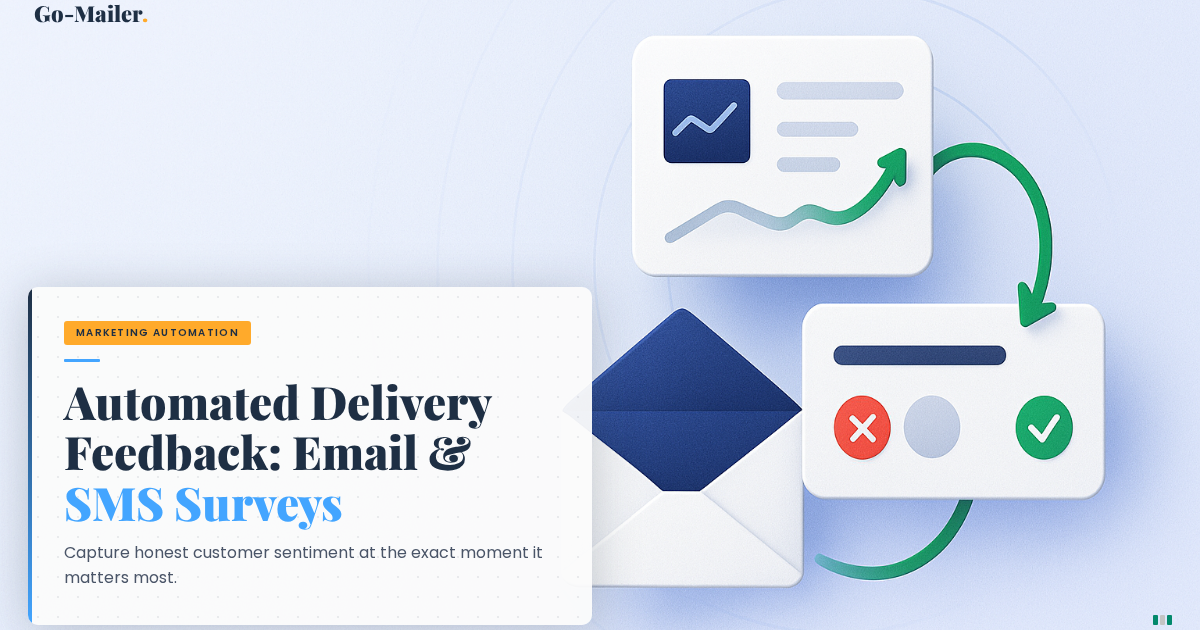
In Nigerian logistics, a delivered package does not guarantee a satisfied customer — and most founders never find out where things went wrong until they start losing repeat business.
The gap between “delivered” and “satisfied” is where revenue quietly disappears. A rider showed up late. The packaging arrived crushed. The customer had to call three times to get a location update. None of that shows up in your delivery dashboard — but all of it shapes whether that customer orders again.
Automated delivery feedback email and SMS surveys close that gap by capturing real customer sentiment at the exact moment it matters most. This guide shows you how to build that system, step by step, without adding manual work to your operations team.
Why Post-Delivery Feedback Is a Blind Spot for Nigerian Logistics Brands
Most logistics companies measure success by one metric: was it delivered? The status update says “completed” and that’s where the story ends internally — even if the customer’s experience tells a very different story.
The problem is that unhappy customers in Nigeria rarely complain through formal channels. They don’t email your support team or fill out a complaint form. They stop ordering, and then they tell five people in a WhatsApp group or post on X (Twitter) about the experience. Silent churn is one of the most expensive revenue leaks in logistics, and it’s almost invisible until your repeat order rates start sliding.
Without structured feedback data, operational decisions get made on gut feel and assumptions. You might not realize that 80% of your negative experiences are happening in one delivery zone, or that complaints about handling cluster around a specific time slot when riders are rushing to meet end-of-day targets. The patterns are there — but only if you’re collecting the data.
Trying to fill that gap manually doesn’t scale. Once you’re handling 50 or more deliveries a day, calling customers for feedback or monitoring social media for mentions becomes a full-time job you can’t afford to create.
Designing a Feedback Survey That Customers Will Actually Complete
The biggest mistake logistics brands make with post-delivery surveys is treating them like research projects. A 10-question form sent to someone who just received a parcel will get ignored.
Keep it to 2–4 questions maximum. In practice, the highest-performing approach in mobile-first markets like Nigeria is a single rating question paired with one optional open-ended field. That’s it. The goal is a response, not a dissertation.
Use a star rating or numbered scale (1–5) as your primary question. It requires zero typing, works cleanly in both email and SMS formats, and gives you quantifiable data you can track over time. Something like: “How would you rate your delivery experience today? Reply 1–5.”
Getting the Timing Right
Timing your feedback trigger is as important as the survey itself. Send the request too quickly and the customer may not have fully inspected their order. Wait too long and the moment has passed — they’ve moved on and the response rate drops sharply.
The sweet spot for most Nigerian logistics operations is 30 to 60 minutes after confirmed delivery. That’s when the experience is still fresh, the parcel has been opened, and the customer’s honest reaction is right at the surface.
Language and Tone
Conversational copy consistently outperforms formal survey language in SMS. “How did your delivery go today?” feels like a message from a human being. “Please rate your recent delivery experience on our satisfaction scale” feels like a corporate form.
Match the tone to how your customers actually talk. If your brand operates in a market where Pidgin improves relatability, consider testing it on a segment. Keep the language warm, brief, and direct.
SMS marketing copy that converts
Setting Up Your Automated Delivery Feedback Email and SMS Workflow
The technical setup for automated delivery feedback email and SMS is simpler than most founders expect — but it requires connecting the right systems to each other.
Step 1: Connect Your Delivery System to Your Automation Platform
Your delivery management system or order CRM needs to pass a “delivered” status event to your marketing automation platform. That event becomes the trigger for your feedback sequence without anyone on your team having to do anything manually.
If your delivery software supports webhooks or API integrations, this connection is straightforward. If it doesn’t, a tool like Zapier can bridge the gap between most order management systems and automation platforms.
Step 2: Choose Your Channels Strategically
Given Nigeria’s mobile penetration rates, SMS should be your primary feedback channel. Most customers will see and respond to an SMS far faster than they’ll open an email — especially in markets outside Lagos where smartphone ownership and email habits vary widely.
Reserve email for customers with verified addresses, or use it as a follow-up channel for non-responders. A platform like Go-Mailer lets you run both SMS and email from the same automation workflow, which keeps your feedback sequences coordinated and your response data centralized.
Step 3: Build a Two-Step Sequence
The sequence itself doesn’t need to be complicated:
- Message 1 (SMS): Sent 30–60 minutes after delivery confirmation. One rating question, conversational tone, link or reply option to submit score.
- Message 2 (Email): Sent 24 hours later, only if the customer hasn’t responded to the SMS. A slightly more detailed version of the same request, with an optional open-ended field for comments.
Two touchpoints are enough. More than that crosses into harassment territory and damages the brand experience you’re trying to improve.
Step 4: Centralize Your Response Data
Raw responses are only useful if someone can review them. Connect your feedback workflow to a centralized dashboard — whether that’s a built-in analytics view in your automation platform or a spreadsheet integration. Structure the data so your operations team can filter by delivery zone, rider, date range, or product type.
marketing automation for logistics
Turning Feedback Data Into Operational Improvements
Collecting feedback without acting on it is one of the most common and costly mistakes growing logistics brands make. The data only becomes valuable when it drives decisions.
Close the Loop on Low Scores Immediately
Set up automated internal alerts for any response rated 3 stars or below. When a low score comes in, your customer experience team should follow up personally — a call or WhatsApp message — within the same business day. This single step can recover at-risk customers before they churn, and it signals to customers that your brand actually listens.
Look for Patterns, Not Just Individual Complaints
One bad review is an incident. Twenty bad reviews from the same delivery zone over three weeks is an operational problem. Segment your feedback data regularly to identify whether negative scores cluster around specific riders, routes, time windows, or product categories. That’s where your operational fixes need to go.
Use Positive Feedback in Your Marketing
Real customer quotes about fast delivery or professional rider conduct are among the highest-trust content assets you can use. Pull consistently positive feedback themes into your social media content, pitch decks, and sales conversations. Authentic voice from actual customers will always outperform marketing copy you wrote yourself.
Track Score Changes Month Over Month
Use aggregate feedback scores as a lagging indicator of operational health. When you introduce a change — new routing software, additional rider training, upgraded packaging — your satisfaction scores in the following 4–6 weeks will tell you whether it actually worked.
improve customer retention rates
Build the Feedback Loop Before You Need It
An automated delivery feedback email and SMS system transforms every completed delivery into a data point — one that helps you retain customers, close operational gaps, and make decisions based on evidence instead of instinct.
The foundation of a system that actually gets responses at scale in Nigeria is simplicity: short surveys, well-timed triggers, and mobile-first channels. Complexity kills completion rates.
But the real differentiator isn’t the technology. It’s what you do with what you learn. The logistics brands that build sustainable growth are the ones that close the loop — using feedback scores and customer comments to drive weekly operational decisions, not just quarterly reports.
Start with the basics, get responses flowing, and let the data show you where to look next.

Be the first to comment